Exploring the debate between Full-Time vs Part-Time Study in Online Colleges: What’s Better?, this piece delves into the nuances of each option, shedding light on the benefits and drawbacks of both.
The subsequent paragraph will provide detailed insights and examples to help readers navigate this decision effectively.
Full-Time vs Part-Time Study in Online Colleges
Online colleges offer flexible options for students to pursue their education, whether full-time or part-time. Understanding the differences between these study modes can help individuals make an informed decision based on their needs and circumstances.
Full-Time Study
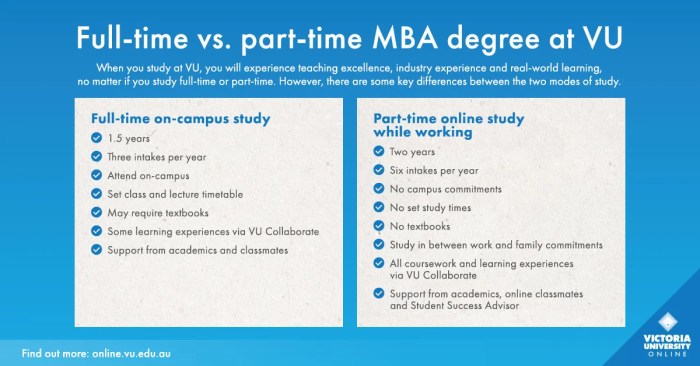
Full-time study in online colleges typically involves taking a heavier course load, equivalent to what a student would take in a traditional on-campus setting. This means dedicating more time each week to lectures, assignments, and studying. A full-time online student may need to commit around 40 hours per week to their coursework, similar to a full-time job.
- Pros of Full-Time Study:
- Allows for faster completion of degree requirements.
- Provides a more immersive learning experience.
- Eligibility for full-time student benefits, such as financial aid.
- Cons of Full-Time Study:
- Requires a significant time commitment, potentially impacting work or personal life.
- May be overwhelming for students who struggle with time management.
- Higher risk of burnout due to intense workload.
Part-Time Study
Part-time study in online colleges allows students to take a reduced course load, spreading out their academic responsibilities over a longer period. This option is ideal for individuals balancing work, family, or other commitments alongside their education.
- Pros of Part-Time Study:
- Flexibility to work or attend to personal obligations while studying.
- Less pressure and more manageable workload for students.
- Opportunity to focus more deeply on each course due to reduced course load.
- Cons of Part-Time Study:
- Extended time to complete degree requirements.
- Limited access to full-time student benefits.
- May require strong self-discipline to stay on track with studies.
In summary, the choice between full-time and part-time study in online colleges depends on individual circumstances, goals, and preferences. Understanding the pros and cons of each option can help students tailor their educational experience to best suit their needs.
Factors to Consider When Choosing Full-Time or Part-Time Study
Deciding between full-time and part-time study in online colleges can be a crucial decision that greatly impacts your academic journey. Several factors should be taken into consideration to make an informed choice based on your individual circumstances.
Work Commitments
- Full-Time Study: If you have significant work commitments, opting for part-time study may be more manageable as it allows you to balance work and academics effectively.
- Part-Time Study: Part-time study can be a suitable option if you are working full-time or have other responsibilities that require a significant time commitment.
Academic Workload
- Full-Time Study: Full-time students in online colleges typically have a heavier academic workload, including more courses per semester. This can be challenging but may lead to a quicker completion of the program.
- Part-Time Study: Part-time students usually take fewer courses per semester, resulting in a lighter workload. This option allows for a more flexible pace of study but may prolong the overall duration of the program.
Tips for Decision-Making
- Evaluate your current work commitments and personal responsibilities to determine if full-time or part-time study aligns better with your schedule.
- Consider your learning style and time management skills to assess whether you can handle a more intensive academic workload in a full-time program.
- Consult with academic advisors or career counselors to gain insights on how your choice of study mode may impact your academic and career goals.
- Review the program requirements and course structure to understand the feasibility of balancing your academic pursuits with other commitments.
Time Management Strategies for Full-Time and Part-Time Online Students
Effective time management is crucial for both full-time and part-time online students to balance their academic responsibilities with other commitments. Here are some strategies that can help students make the most of their time:
Time Management Strategies for Full-Time Online Students
For full-time online students who are juggling a heavy course load, it is essential to prioritize tasks and create a schedule. Here are some effective time management techniques:
- Create a study schedule: Allocate specific time slots for studying, attending lectures, completing assignments, and taking breaks.
- Use a productivity tool or app: Tools like Trello, Todoist, or Google Calendar can help you stay organized and manage your tasks efficiently.
- Avoid multitasking: Focus on one task at a time to increase productivity and avoid feeling overwhelmed.
- Set goals: Break down larger tasks into smaller goals and set deadlines to track your progress.
- Take regular breaks: Schedule short breaks between study sessions to recharge and maintain focus.
Time Management Strategies for Part-Time Online Students
Part-time online students often have to balance their studies with work or family commitments. Here are some time management techniques that work well for part-time students:
- Prioritize tasks: Identify the most important tasks and allocate time to work on them first.
- Establish a routine: Create a consistent study routine that fits around your other commitments.
- Utilize downtime: Make the most of short breaks or gaps in your schedule to review notes or complete small tasks.
- Stay organized: Keep track of deadlines, assignments, and important dates using a planner or digital calendar.
- Seek support: Don’t hesitate to reach out to professors, classmates, or academic advisors for help or guidance when needed.
Both full-time and part-time online students can benefit from using time management tools and apps to enhance their productivity and stay on track with their studies. By implementing these strategies and utilizing available resources, students can effectively manage their time and achieve academic success in their online programs.
Impact on Learning Experience
When comparing full-time and part-time study in online colleges, the learning experience can vary significantly for students. Let’s delve into how these differences affect the overall educational journey.
Social Interaction Aspect
Online full-time students often have more opportunities for social interaction compared to part-time students. With a heavier course load, full-time students may engage more frequently in group discussions, virtual study sessions, and online forums. This increased social interaction can enhance the learning experience by providing different perspectives, collaboration opportunities, and a sense of community among peers.
Pace of Learning
The pace of learning is another key difference between full-time and part-time study in online colleges. Full-time students typically follow a more structured and rigorous schedule, completing courses at a faster rate. This accelerated pace can be beneficial for those who prefer a more immersive learning experience.
On the other hand, part-time students have the flexibility to spread out their coursework over a longer period, allowing for a more manageable workload and potentially reducing feelings of overwhelm or burnout.
Concluding Remarks

In conclusion, weighing the options between full-time and part-time study in online colleges requires a thoughtful consideration of individual circumstances. This discussion aims to empower readers to make informed choices that align with their goals and aspirations.
FAQ Guide
What factors should I consider when deciding between full-time and part-time study?
Consider your work commitments, academic workload, and personal circumstances to make the best choice.
How do full-time and part-time study schedules typically differ for online students?
Full-time students usually have a heavier course load and may require more hours dedicated to studying compared to part-time students.
Are there specific time management strategies tailored for full-time online students?
Yes, strategies like setting a strict study schedule, prioritizing tasks, and utilizing productivity tools can be beneficial for full-time online students.
How does the learning experience vary between full-time and part-time online students?
Full-time students may have a more immersive academic experience with deeper engagement, while part-time students might enjoy more flexibility but potentially slower progress.